Have you ever been told that your eyes are “too difficult” for contact lenses? Perhaps traditional soft lenses feel uncomfortable, move around too much, or fail to provide the clear vision you expected. You may have even stopped wearing contacts altogether because you assumed they simply were not an option for you.
The good news is that difficulty wearing standard contact lenses does not necessarily mean you cannot wear contact lenses. It may mean that your eyes need a more customized solution.
At Contact Lens Institute of Kansas (CLIK), we work with patients whose vision needs go beyond what conventional contact lenses can provide. Specialty contact lenses are designed for the unique shape, health, and visual needs of each patient’s eyes.
What Makes Someone Hard to Fit for Contact Lenses?
Standard soft contact lenses are designed to work for a broad range of eyes. However, not every eye has a regular shape or a straightforward prescription.
You may benefit from specialty contact lenses if you have:
- Keratoconus or another irregular corneal condition
- Significant astigmatism
- A high or complex prescription
- Corneal scarring
- A history of corneal surgery or transplantation
- Discomfort with traditional soft contact lenses
- Vision that remains blurry despite wearing contacts
- Dryness that makes conventional lenses difficult to tolerate
Some patients come to us after trying several types of lenses without success. Others have never worn contacts because they were previously told that glasses were their only realistic option.
Every situation is different. A detailed specialty contact lens evaluation can help determine whether another lens design may be appropriate.
How Are Specialty Contact Lenses Different?
Specialty contact lenses are not simply stronger versions of regular contacts. They may use different materials, sizes, shapes, and fitting methods to address more complex vision needs.
Depending on your eyes, options may include:
Scleral lenses
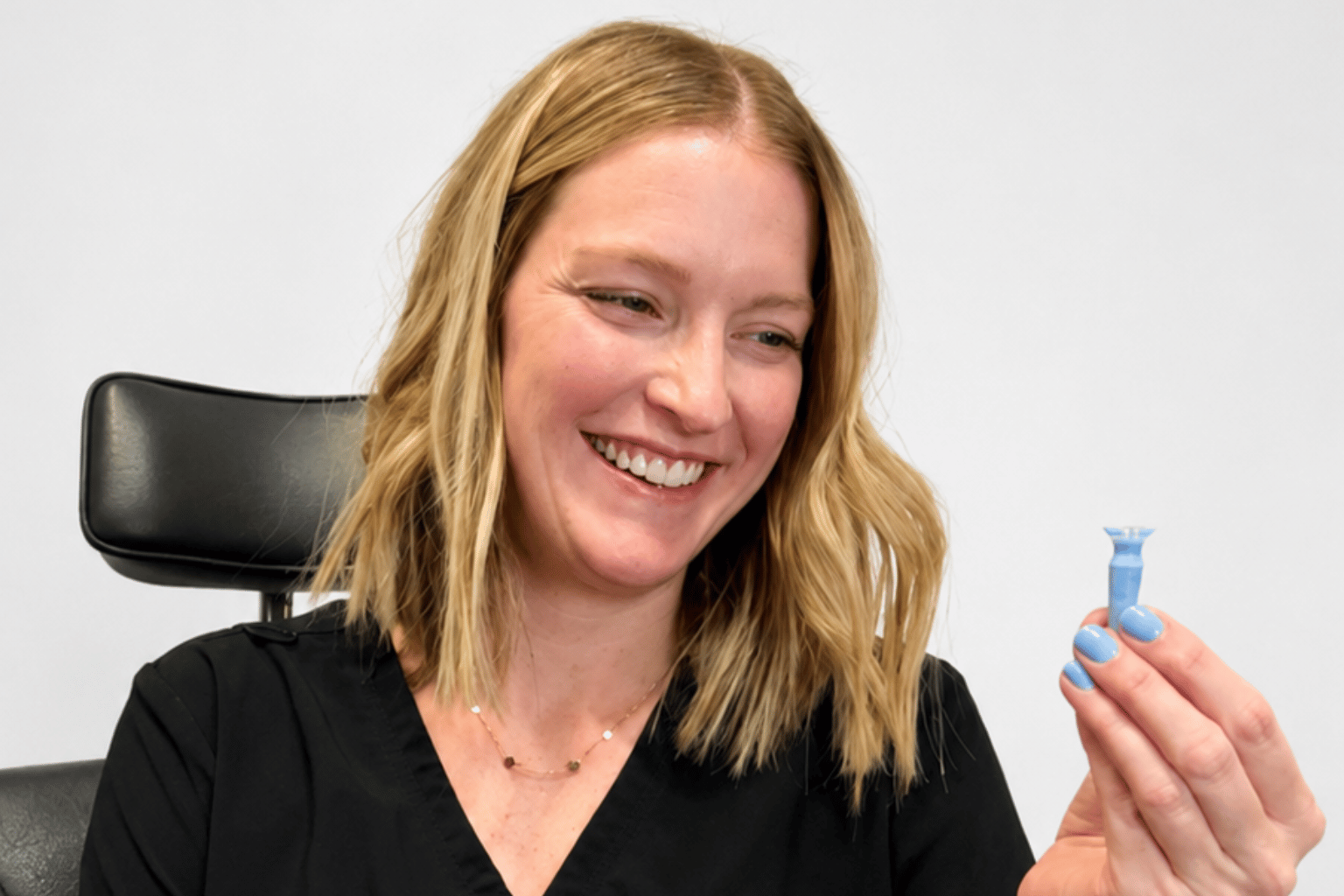
Scleral lenses are larger lenses that vault over the cornea and rest on the white portion of the eye. A layer of preservative-free saline sits between the lens and the corneal surface, creating a smooth optical surface that may improve vision and comfort.
Corneal gas-permeable lenses
These smaller, firm lenses rest on the cornea. Their shape and material can provide crisp vision for certain irregular corneas and complex prescriptions.
Hybrid lenses
Hybrid lenses combine a firm central area with a softer outer portion. They are designed to offer the visual benefits of a gas-permeable center with the familiarity of a soft lens edge.
Customized soft lenses
Some patients can benefit from soft lenses made with more individualized parameters than standard disposable contacts.
The best lens is not determined by which option is most popular. It is determined by your eye shape, prescription, corneal health, comfort, and daily activities.
What Happens During a Specialty Contact Lens Evaluation?
A specialty contact lens evaluation is more detailed than a routine contact lens fitting.
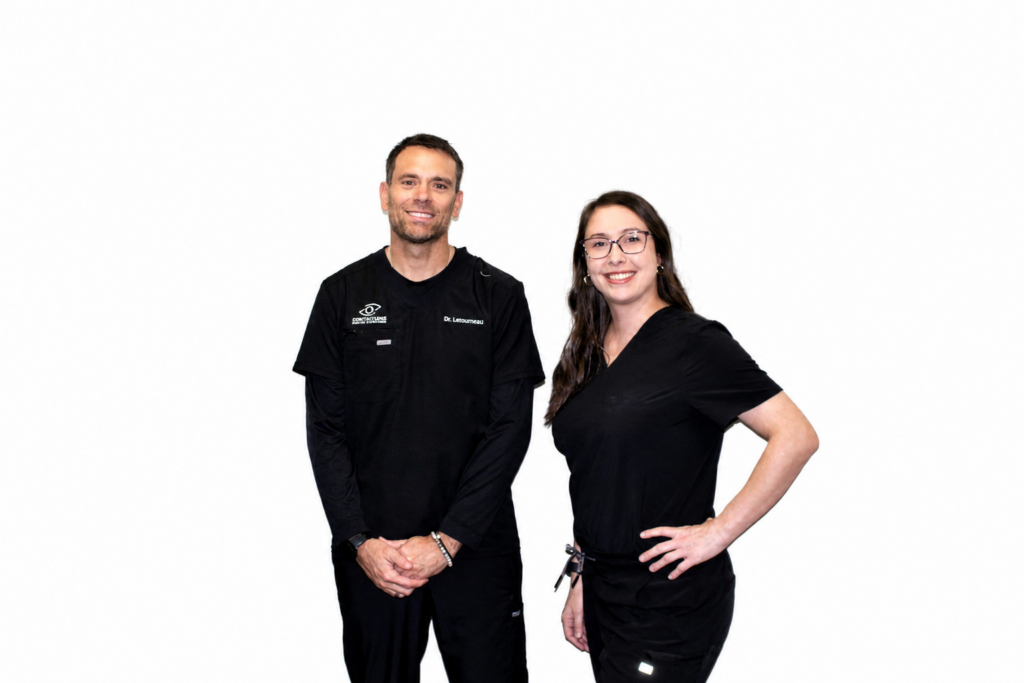
Dr. Letourneau begins by listening to your experiences and concerns. You may discuss previous lenses, comfort problems, visual demands, work activities, hobbies, and what you hope to accomplish with contact lenses.
Your evaluation may also include advanced measurements or imaging of the front surface of your eyes. These details help Dr. Letourneau understand the shape of your cornea and select an appropriate diagnostic lens.
You may try a lens during the appointment so its fit, movement, comfort, and vision can be evaluated. Specialty contact lenses often require adjustments, so follow-up visits are an important part of the process.
Here at CLIK, these evaluations are designed to be thorough and unhurried. The goal is to understand your eyes rather than rush toward a one-size-fits-all solution.
A More Personalized Approach to Contact Lenses
People with complex vision needs often spend years adapting to blur, discomfort, or limitations. They may assume that struggling with contact lenses is something they simply have to accept.
Specialty contact lenses offer another path. Although no lens can guarantee a particular result, a customized evaluation can help identify options that may not have been considered before.
If traditional contacts have not worked for you, it may be time to look beyond traditional contacts.
Frequently Asked Questions
Are specialty contact lenses comfortable?
Comfort varies from person to person and depends on the lens design, fit, condition of the eye, and wearing schedule. Many specialty lenses are designed to avoid or reduce contact with sensitive areas of the cornea.
How long does the fitting process take?
The process varies. Some patients require only minor adjustments, while others need several follow-up visits to refine the design.
Can I wear specialty lenses every day?
Many patients wear their lenses regularly, but your recommended schedule will depend on your eye health, lens design, and individual needs.
Schedule Your Consultation
Being told that you are hard to fit does not mean you are out of options. Contact Lens Institute of Kansas provides personalized specialty contact lens evaluations for patients with complex vision and comfort needs.
Schedule an evaluation to learn whether specialty contact lenses may be right for your eyes.