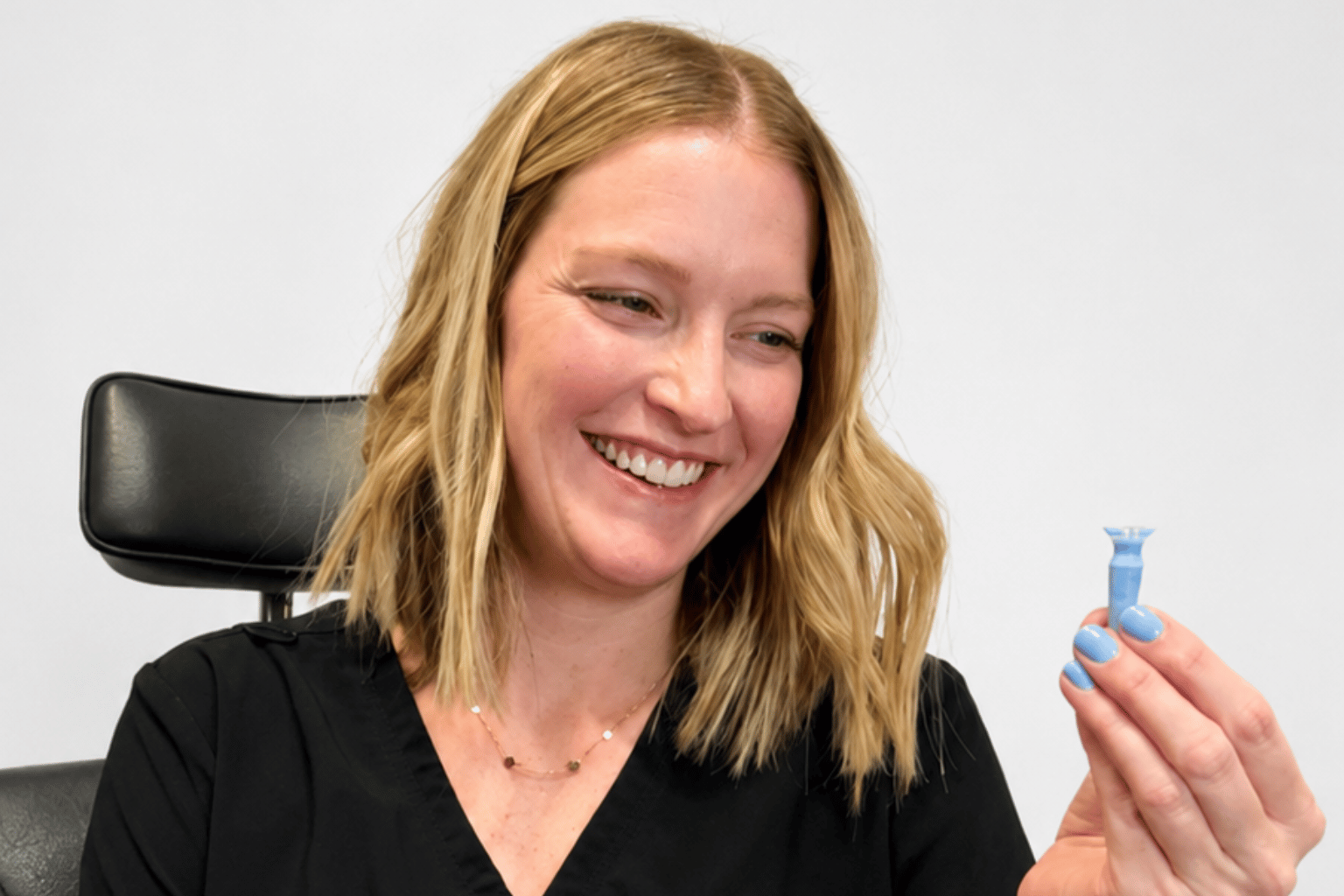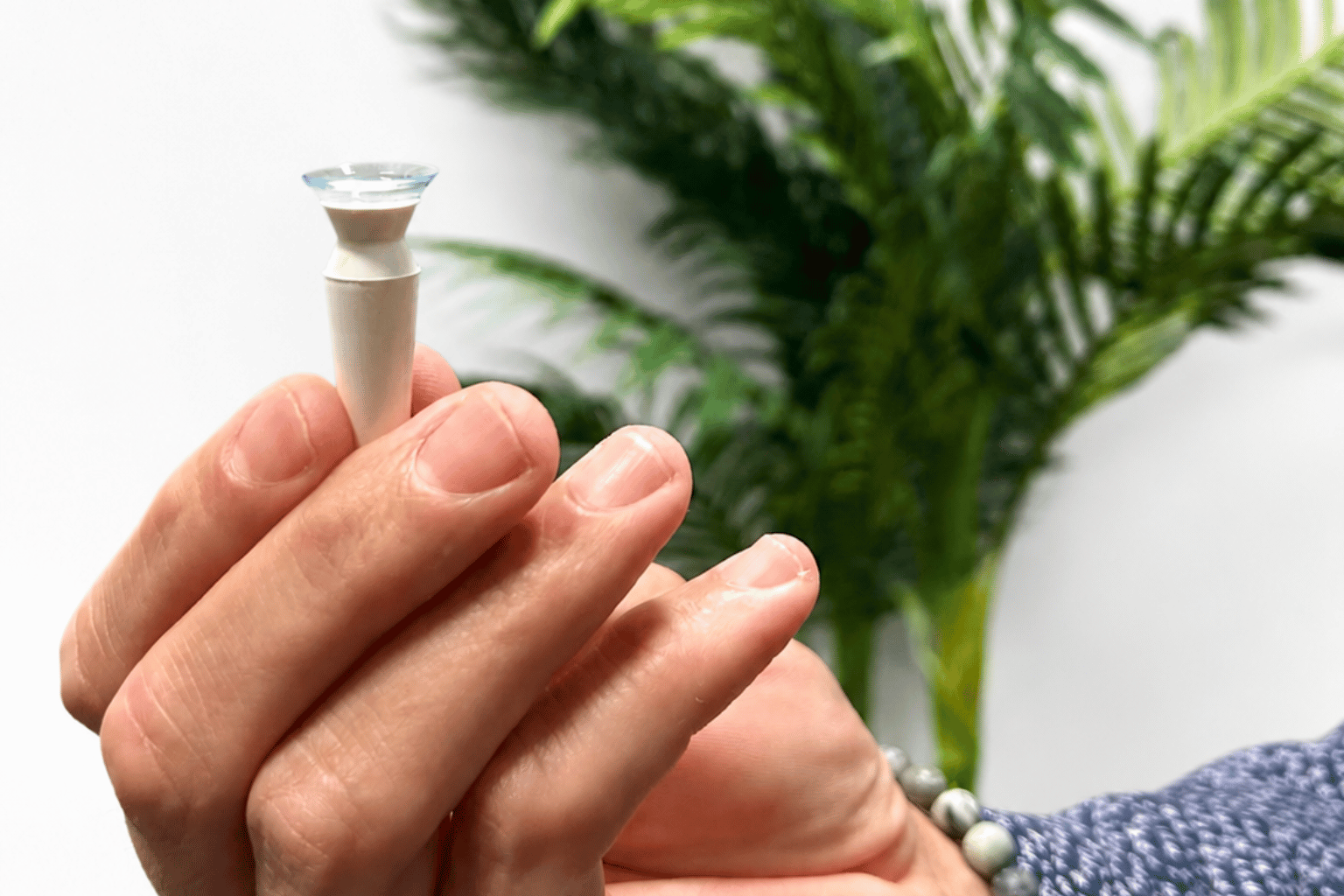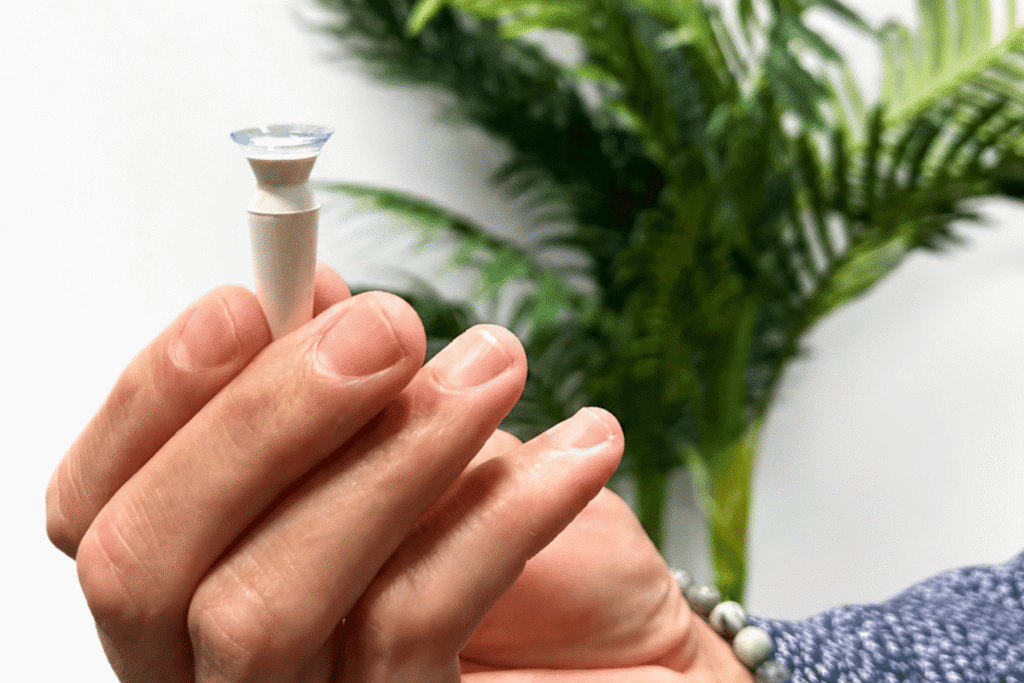
Scleral lenses are specialty contact lenses designed for people who may not get clear or comfortable vision from traditional soft contact lenses or glasses. They are larger than standard contact lenses and, instead of resting directly on the cornea, they sit on the white part of the eye, called the sclera.
Because of their size and design, scleral lenses create a small space between the lens and the surface of the eye. Before the lens is inserted, that space is filled with preservative-free saline. The result is a smooth optical surface over the eye while the cornea remains covered by a reservoir of fluid.
That design makes scleral lenses useful for several different eye conditions, especially when the shape or surface of the cornea makes traditional vision correction difficult.
At Contact Lens Institute of Kansas, Dr. Letourneau works with patients from Lawrence, Topeka, the Kansas City area, and surrounding communities throughout Kansas and Missouri who are looking for more specialized contact lens options. Some patients come in after struggling with blurry or unstable vision, while others have had trouble getting comfortable in traditional contact lenses.
Keratoconus
Keratoconus is one of the most common reasons someone may be fitted with scleral lenses. With keratoconus, the cornea gradually becomes thinner and develops a more irregular, cone-like shape. Because the surface is no longer evenly curved, glasses and regular soft contact lenses may not fully correct the blurry or distorted vision that results.
A scleral lens does not have to match every irregularity of the cornea. Instead, it vaults over the cornea and creates a new, smooth optical surface in front of it. For many people with keratoconus, this can provide clearer and more stable vision than they are able to achieve with glasses or traditional soft contacts.
Dr. Letourneau often sees patients with keratoconus who have already tried glasses or traditional contact lenses but are still dealing with blurry or distorted vision. In those cases, part of the evaluation is figuring out how much of the vision problem is coming from the irregular shape of the cornea and whether a scleral lens could provide more stable correction.
Irregular Corneas
Keratoconus is not the only condition that can cause an irregular corneal shape. Some people naturally have irregular corneas, while others develop irregularities after an injury, eye disease, infection, or surgery.
When the cornea is irregular, light does not focus as evenly inside the eye. This can cause symptoms such as blurred vision, distortion, glare, halos, or fluctuating vision. Traditional contact lenses may have difficulty staying centered or providing consistent correction on these eyes. Since scleral lenses rest farther out on the sclera rather than directly on the cornea, they can often create a more stable visual surface.
Severe Dry Eye
Scleral lenses may also be used for certain patients with significant dry eye or ocular surface problems. Unlike a regular contact lens that sits directly against the cornea, a scleral lens holds a layer of preservative-free saline between the lens and the eye throughout wear.
For some patients, this fluid reservoir can help protect the cornea and provide relief from the constant exposure that can make severe dry eye uncomfortable. That does not mean scleral lenses are necessary for every person with dry eyes. Dry eye has many possible causes, and treatment depends on what is contributing to the problem. A specialty contact lens evaluation can help determine whether a scleral lens makes sense as part of the treatment plan.
For patients with dry eyes, Dr. Letourneau looks at more than just the symptoms. He also evaluates the surface of the eye and what may be contributing to the dryness before deciding whether a scleral lens makes sense as part of the treatment plan.
Vision After Eye Surgery
Some people have difficulty getting clear vision with glasses or standard contacts after certain eye surgeries. Procedures involving the cornea can sometimes change its shape in ways that make traditional vision correction more challenging. Scleral lenses may be considered when the corneal surface becomes irregular after procedures such as corneal transplants or other corneal surgeries.
The lens creates a smooth optical surface over the irregular cornea, which may improve vision when glasses are unable to fully correct it. Every surgical eye is different, so the fit has to be carefully customized.
Corneal Scarring
Scarring on the cornea can change both its transparency and its shape. Depending on the location and severity of the scar, someone may experience blurred, distorted, or irregular vision that cannot be completely corrected with glasses.
A scleral lens cannot remove a corneal scar, but in certain cases it may improve vision by creating a more regular optical surface over the eye. Whether a scleral lens will help depends on the type and location of the scar and how much of the vision problem is related to the irregular shape of the cornea.
High or Irregular Astigmatism
Some people with astigmatism do very well in standard soft contact lenses. Others have more complicated prescriptions or corneal shapes that make getting clear, stable vision more difficult. Scleral lenses can be customized to account for the individual shape of the eye and the patient’s prescription.
For someone whose vision continues to fluctuate or remain blurry in traditional contacts, a specialty lens evaluation can help determine whether a different type of lens would provide better stability.
When Regular Contact Lenses Are Uncomfortable
There are situations where someone’s prescription works well in a traditional contact lens, but the lens itself is difficult to wear comfortably. A scleral lens fits very differently from a standard soft lens or a smaller rigid gas permeable lens. Since it rests on the sclera and vaults over the sensitive corneal surface, some people who have struggled with other lenses are surprised by how different a properly fitted scleral lens feels.
Comfort is still very individual. The size, shape, alignment, and overall fit of the lens all matter, which is why scleral lenses are custom fitted rather than simply selected from a standard contact lens prescription.
Dr. Letourneau also sees patients who have gone through several different contact lens options and still struggle with comfort. Sometimes the issue is the fit of the lens, sometimes it is the shape of the eye, and sometimes it is a combination of both.
Are Scleral Lenses Only for People With Eye Conditions?
Not always. Most scleral lens wearers have a specific reason traditional glasses or contact lenses are not giving them the vision or comfort they need. However, the decision to use a scleral lens is based on the individual eye rather than simply the name of a diagnosis.
Two people with the same condition may need completely different lens designs. One may do well in glasses or soft contacts, while another may benefit from a scleral lens. That is why the first step is usually a detailed evaluation of the cornea, prescription, tear film, and overall eye health.
How Are Scleral Lenses Different From Regular Contacts?
The biggest difference is where the lens rests. A standard soft contact lens sits directly on the cornea and moves slightly when you blink. A scleral lens is larger and extends beyond the cornea so that it rests on the sclera.
The center of the lens is designed to vault over the cornea without pressing directly against it. This difference allows the lens to create a smooth optical surface even when the cornea underneath is irregular. It also creates room for the saline reservoir between the lens and the eye.
Because every eye has a slightly different shape, scleral lenses require more detailed measurements and fitting than standard contact lenses.
Who Might Benefit From Scleral Lenses?
Someone may be referred for a scleral lens evaluation if they have:
- Keratoconus
- An irregular cornea
- Significant corneal astigmatism
- Corneal scarring
- Certain complications following corneal surgery
- A corneal transplant
- Severe dry eye or ocular surface disease
- Blurry or unstable vision in traditional contacts
- Difficulty comfortably wearing other types of contact lenses
Being on this list does not automatically mean someone needs scleral lenses. The best lens option depends on the person’s eye shape, eye health, prescription, lifestyle, and visual needs.
What Happens During a Scleral Lens Evaluation?
Dr. Letourneau evaluates the shape and health of the eye and takes detailed measurements to determine how the lens should fit. Diagnostic lenses may be placed on the eye so Dr. Letourneau can evaluate how the lens sits, how much clearance there is over the cornea, and how the lens aligns with the sclera.
He often sees patients who have already tried several types of contacts before coming in for a specialty lens evaluation. In those cases, the first step is figuring out whether the problem is the prescription, the shape of the cornea, comfort, or a combination of those factors.
Adjustments may then be made to the lens design before a final lens is ordered. Because scleral lenses are customized, it may take more than one visit to fine-tune the fit and vision. Patients are also taught how to properly insert, remove, clean, fill, and care for their lenses.
The Goal Is Better Vision and Comfortable Wear
Scleral lenses are not a single solution for every vision problem. They are one of several specialty contact lens options available when a more traditional approach is not working well. For the right patient, however, they can make a significant difference.
Because every patient comes in with a different history, Dr. Letourneau does not approach every scleral lens fitting the same way. The goal is to understand what has and has not worked in the past and build the lens around the individual eye.
The goal of a scleral lens fitting is not simply to put a larger contact lens on the eye. It is to create a lens that works with the individual shape of that eye to provide clear, stable vision while protecting the health of the ocular surface.
If glasses or traditional contacts just aren’t giving you the clear, comfortable vision you need, a specialty contact lens evaluation can help you find out if scleral lenses may be a good option! Dr. Letourneau and our team at Contact Lens Institute of Kansas work with patients from Lawrence, Topeka, the Kansas City area, and surrounding communities throughout Kansas and Missouri.