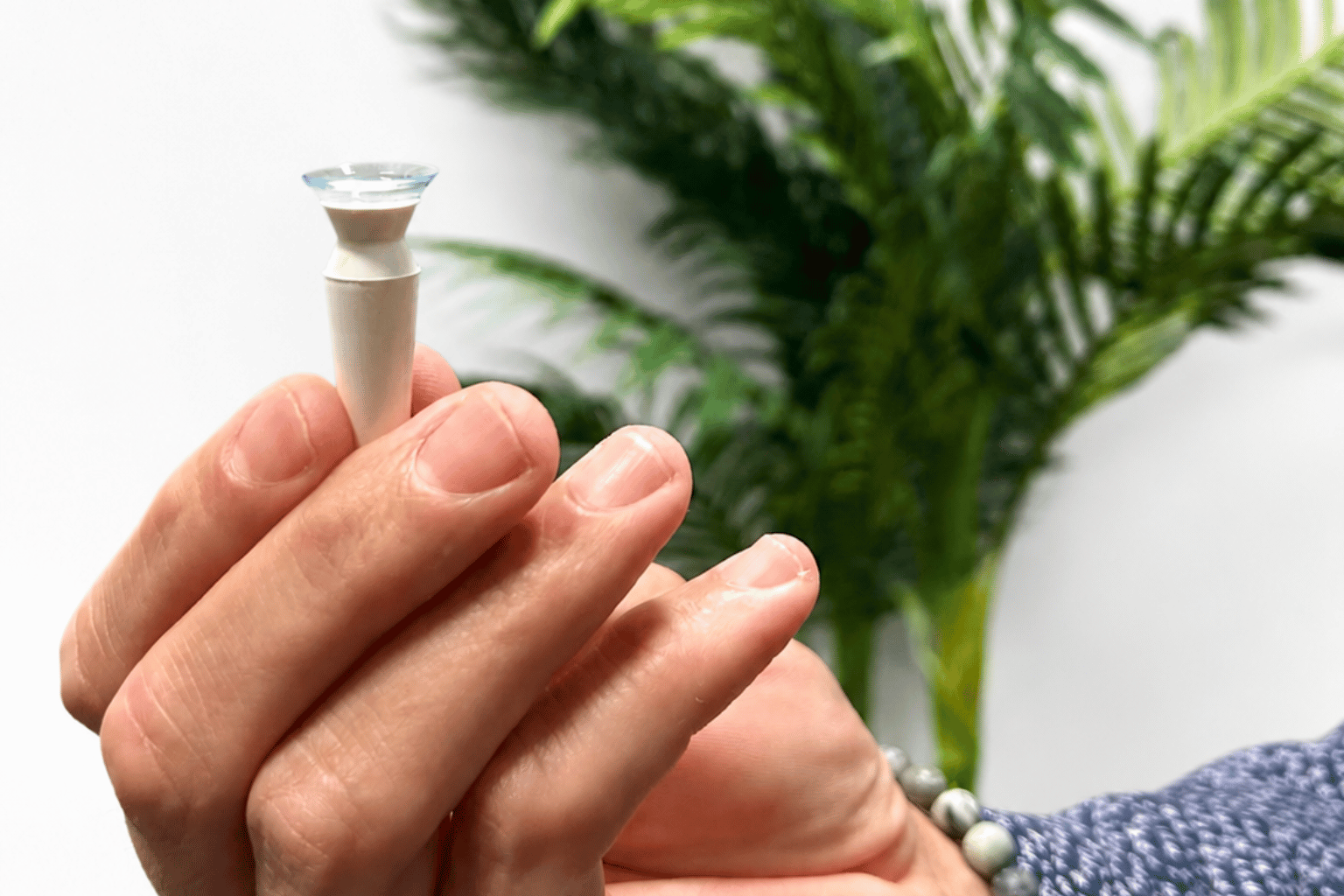
One of the first questions people ask about scleral lenses is, “Are they uncomfortable?”
It makes sense to wonder. Scleral lenses are noticeably larger than regular soft contact lenses, so they can look a little intimidating at first. But their size does not necessarily mean they are uncomfortable. In fact, many people are surprised by how comfortable a properly fitted scleral lens can feel.
Scleral lenses are designed differently from traditional contact lenses. Instead of sitting directly on the cornea, they vault over it and rest on the white part of the eye, called the sclera. The space between the lens and the cornea is filled with preservative-free saline before the lens is inserted.
That design is one reason scleral lenses can be a good option for people who have struggled with comfort in other types of contact lenses.
At Contact Lens Institute of Kansas (CLIK), Dr. Letourneau and our team work with patients from Lawrence, Topeka, the Kansas City area, and surrounding communities throughout Kansas and Missouri who are looking for more comfortable or specialized contact lens options.
So, Do Scleral Lenses Hurt?
A properly fitted scleral lens should not hurt. You may be aware of the lens when you first begin wearing it, especially if you have never worn a specialty contact lens before. There is usually an adjustment period while you get used to how the lens feels and learn how to put it in and take it out.
But significant pain, persistent irritation, or a lens that becomes increasingly uncomfortable throughout the day is not something you should simply learn to live with. Comfort depends heavily on how well the lens fits your individual eye.
That is one of the biggest differences between scleral lenses and standard contacts. A scleral lens is not simply chosen based on your prescription. Its size, shape, clearance, and landing area all need to work with the shape of your eye.
Why Can Scleral Lenses Be Comfortable Even Though They Are Larger?
This is something that surprises a lot of patients. You might assume that a larger contact lens would automatically feel more noticeable. But where the lens sits matters just as much as its size.
The cornea is extremely sensitive. Smaller rigid gas permeable lenses sit directly on the cornea and can move with each blink, which some people find difficult to tolerate. A scleral lens is designed to vault over the cornea instead. Its edges rest farther out on the sclera.
Because the lens is larger, it can also be very stable on the eye. A well-fitted scleral lens should not move around the same way some smaller lenses can. For some people who have never been comfortable in traditional contacts, this different design can make a big difference.
What Does a Scleral Lens Feel Like?
When you first put in a scleral lens, you may notice that something is on your eye. New wearers may also be more aware of the edges of the lens at first. As you adjust, that awareness may become much less noticeable.
There is also a learning curve with putting scleral lenses in. The bowl of the lens needs to be completely filled with preservative-free saline before insertion, and the lens needs to be placed on the eye without trapping an air bubble underneath.
Sometimes what a new wearer describes as “the lens feels weird” is actually related to the insertion process rather than the lens itself. That is why learning proper insertion and removal is an important part of getting started with scleral lenses.
Why Might a Scleral Lens Feel Uncomfortable?
If a scleral lens is uncomfortable, there can be several possible reasons.
1. The Fit May Need to Be Adjusted
Every sclera has a slightly different shape. A lens that puts too much pressure in one area may cause redness, irritation, or a feeling of pressure. A lens that is too loose may also cause problems.
During a scleral lens fitting, Dr. Letourneau evaluates how the lens rests on the eye rather than looking only at how clearly you can see through it. Sometimes small changes to the lens design can make a noticeable difference in comfort.
2. There May Be an Air Bubble Under the Lens
Scleral lenses are filled with preservative-free saline before being placed on the eye. If the lens is not completely filled or is inserted at an angle, an air bubble can become trapped underneath it. A bubble may make the lens feel uncomfortable and can interfere with vision.
This is one reason the insertion technique can take a little practice.
3. The Lens May Need to Be Cleaned or Refilled
Over the course of the day, some people notice their vision becoming cloudy or their lenses becoming less comfortable. Tears, mucus, oils, or other debris can sometimes collect around or underneath the lens. Depending on the cause, removing the lens, cleaning it, and refilling it with fresh preservative-free saline may help.
If this happens frequently, it is worth mentioning during a follow-up visit rather than assuming it is just part of wearing scleral lenses.
4. The Eye May Be Dry or Irritated for Another Reason
Scleral lenses are often used for people with significant dry eye or ocular surface problems, but they do not make every source of eye irritation disappear. Dry eye can have many causes. Allergies, eyelid problems, inflammation, the tear film, and other factors may also affect how comfortable a lens feels.
Dr. Letourneau looks at the health of the entire eye when evaluating comfort rather than assuming the lens itself is always the problem.
Can Scleral Lenses Help People Who Find Regular Contacts Uncomfortable?
For some patients, yes. Some people come to a specialty contact lens office after trying several types of contacts without finding something they can comfortably wear.
Dr. Letourneau often evaluates whether the discomfort is coming from the lens fit, the shape of the cornea, the ocular surface, the prescription, or a combination of factors. Understanding why previous contact lenses have not worked is an important part of deciding what to try next.
A scleral lens may be considered when traditional contacts are not providing the combination of vision and comfort a patient needs. That does not mean everyone who dislikes soft contacts automatically needs scleral lenses. There are many different contact lens designs, and the best option depends on the individual eye.
Are Scleral Lenses Comfortable for People With Keratoconus?
Keratoconus is a common reason someone may be referred for a scleral lens evaluation. With keratoconus, the cornea becomes thinner and develops an irregular shape. That can make both vision correction and contact lens fitting more complicated.
Because a scleral lens vaults over the irregular cornea instead of resting directly on it, it can provide a more stable surface for vision without relying on the cornea itself as the primary landing area.
Two people with keratoconus may have very different corneal and scleral shapes, which is why scleral lenses need to be fitted to the individual patient rather than treating every case of keratoconus the same way.
What About Scleral Lenses for Dry Eye?
Some people with significant dry eye are also surprised that a contact lens could potentially be comfortable. Scleral lenses are different because the cornea remains behind a reservoir of preservative-free saline while the lens is being worn. For certain patients with severe dry eye or ocular surface problems, that fluid reservoir can help protect the surface of the eye.
However, dry eye is not the same for everyone. Someone with mild dryness from one cause may need a completely different approach than someone with significant ocular surface disease. A specialty contact lens evaluation helps determine whether a scleral lens actually makes sense for that particular patient.
How Long Does It Take to Get Used to Scleral Lenses?
There is no exact adjustment period that applies to everyone. Some people become comfortable with their lenses fairly quickly. Others need more time to get used to the sensation of the lens or become confident with insertion and removal. Learning to handle the lenses can sometimes be the bigger adjustment than actually wearing them.
At CLIK, patients are taught how to insert, remove, fill, clean, and care for their scleral lenses. It is completely normal for this to take some practice. The goal is for you to feel comfortable managing your lenses on your own rather than leaving your appointment unsure of what to do.
What Happens if My Scleral Lenses Are Uncomfortable?
The lens may need an adjustment, there may be an issue with insertion, or something else may be affecting the surface of the eye. During follow-up visits, Dr. Letourneau can evaluate how the lens is sitting after it has been worn and look for areas where the fit may need to be changed.
Because scleral lenses are customized, fine-tuning the design can be a normal part of the fitting process. If you develop significant pain, unusual redness, sudden changes in vision, or another new eye symptom, remove the lens and contact our team.
How Does Dr. Letourneau Evaluate Scleral Lens Comfort?
Clear vision is important, but it is only one part of a successful scleral lens fitting. Dr. Letourneau also evaluates how the lens interacts with the eye. He looks at how much space there is between the lens and the cornea, how the lens sits on the sclera, and whether there are areas of excessive pressure or other concerns.
He also talks with patients about how the lenses actually feel during their normal day. That matters because a lens can look good during an initial evaluation but still need adjustments based on what the patient experiences after wearing it.
Some patients come to CLIK after already trying multiple contact lenses. In those cases, understanding what has and has not worked before can help Dr. Letourneau determine what needs to be different about the next lens.
The Bottom Line: Are Scleral Lenses Uncomfortable?
Despite their larger size, scleral lenses are not supposed to be painful or constantly uncomfortable. Many people are surprised by how different they feel from the contact lenses they have tried in the past.
The fit matters. So does the health of the eye, proper insertion, lens care, and follow-up. If you have struggled to comfortably wear contact lenses, that does not necessarily mean contacts are no longer an option for you.
Dr. Letourneau and our team at Contact Lens Institute of Kansas work with patients from Lawrence, Topeka, the Kansas City area, and surrounding communities throughout Kansas and Missouri who need a more customized approach to contact lenses. If your current contacts are uncomfortable or simply are not working for you, a specialty contact lens evaluation can help you find out what other options may be available!