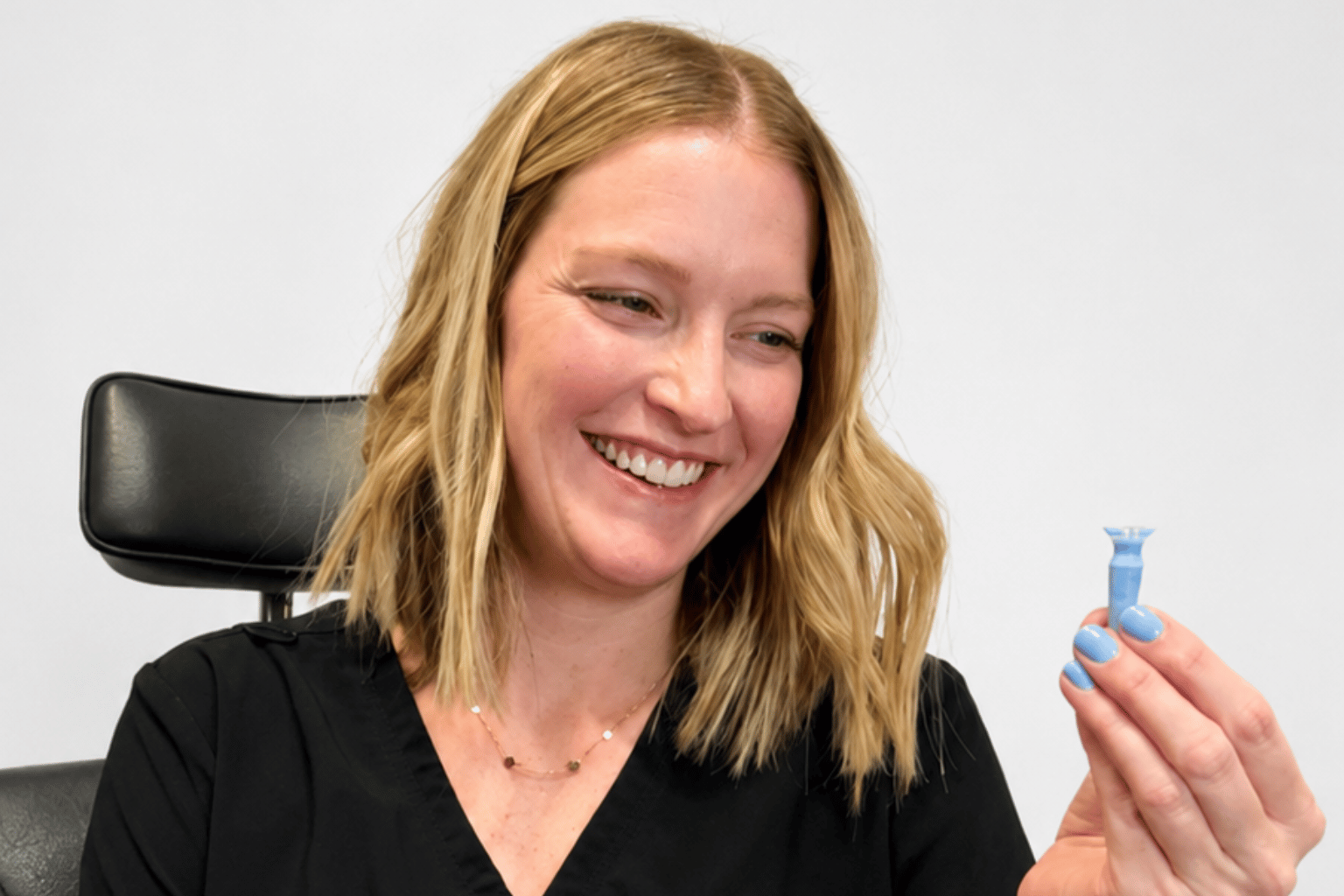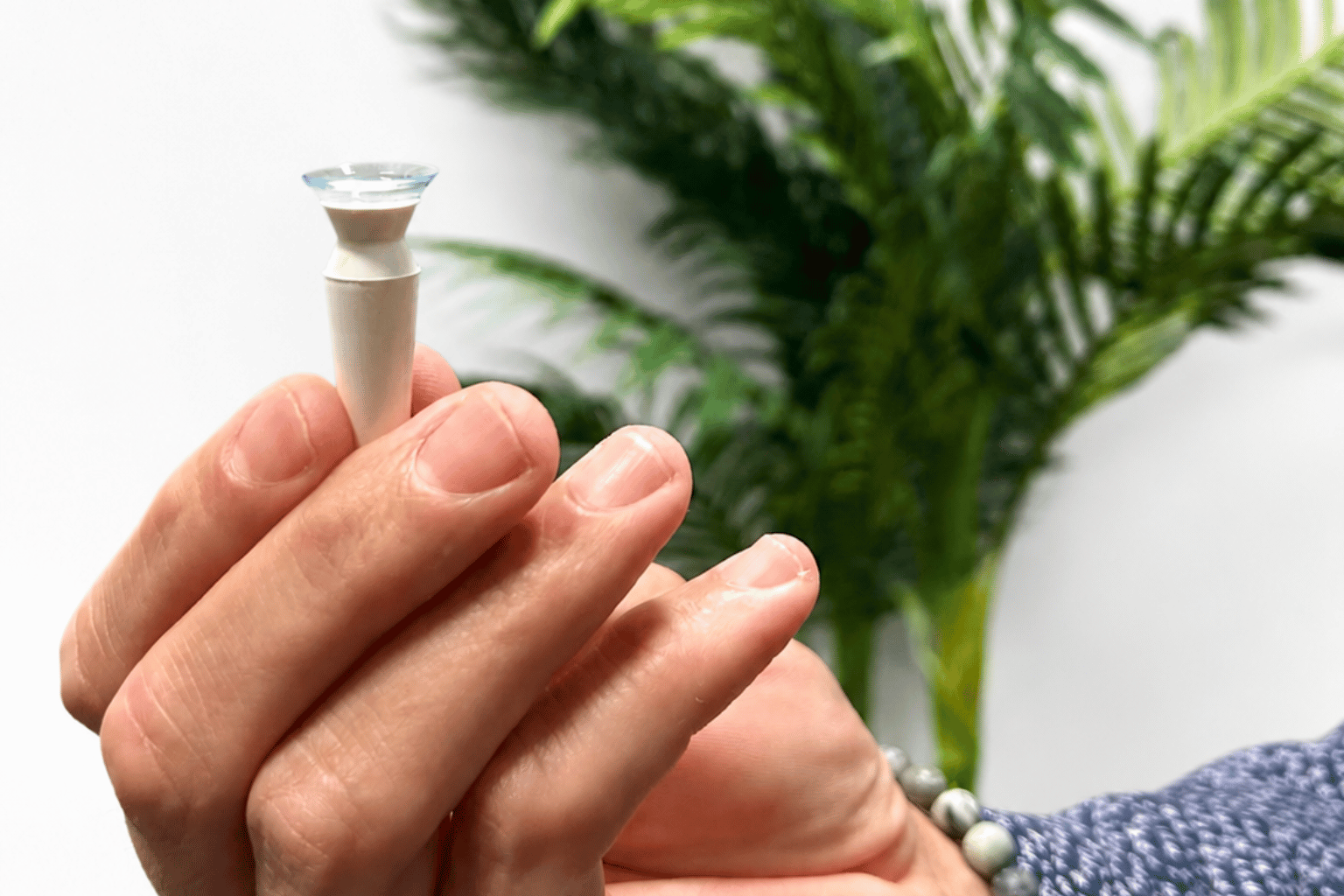
If you are new to scleral lenses, cleaning and caring for them can feel like a lot at first. There are a few more steps than there are with regular soft contacts, but once you get into a routine, it usually becomes much easier.
The most important thing is to keep your lenses clean, disinfect them properly, and use the right products for each step.
At Contact Lens Institute of Kansas (CLIK), Dr. Letourneau and our Specialty Contact Lens Coordinators, Molly and Cassie, spend time helping patients learn how to care for their lenses before they are expected to manage everything on their own.
We see patients from the Kansas City area, Lawrence, Topeka, and surrounding Kansas and Missouri communities, and we know that one of the biggest questions new scleral lens wearers have is simply, “What am I supposed to do with these every day?”
The basic routine is:
- Start by washing and drying your hands really well.
- Take the scleral lens out and place it in your clean palm.
- Use the cleaning solution your eye doctor recommended and gently clean the lens. 4. Rinse it if your care system calls for that step.
- Place the lens in the correct case with a fresh disinfecting solution.
- When you’re ready to wear it again, fill the lens with fresh preservative-free saline before putting it back in your eye.
The exact products and steps can vary depending on the care system Dr. Letourneau recommends for you, so it is important to follow the instructions you were given with your lenses. You should not assume that a product you used with soft contact lenses is automatically appropriate for scleral lenses.
Start With Clean, Dry Hands
Before touching your scleral lenses, wash your hands well with soap and water. Then dry them completely. This sounds simple, but it is one of the most important parts of contact lens care.
Try to avoid soaps that leave behind a heavy moisturizer, lotion, or oily residue on your hands. Anything left on your fingers can transfer to the lens and end up on your eye. Lint from towels can also stick to the lens, so use a clean towel that does not shed much.
At CLIK, Molly and Cassie go over these little details with patients because they can make a bigger difference than you might expect!
Clean Your Lenses After You Remove Them
Once you remove your scleral lens, it should be cleaned using the lens care product recommended for you. Depending on your system, this may involve putting the lens in the palm of your hand, applying the cleaning solution, and gently rubbing both sides of the lens.
The goal is to remove things that can build up on the surface during the day, such as oils, mucus, proteins, makeup, and other debris. Even if the lens looks clear, there may still be buildup that you cannot easily see. Cleaning the lens before storing it helps keep that buildup from staying on the lens overnight.
Do You Need to Rub Scleral Lenses?
For many care systems, gently rubbing the lens is an important part of cleaning. The key word is gently. You do not need to scrub the lens hard. Scleral lenses are durable, but they still need to be handled carefully. Dr. Letourneau may recommend a different routine depending on the lens material, your eyes, and whether you tend to develop more deposits than average.
How Do You Disinfect Scleral Lenses?
Cleaning and disinfecting are not exactly the same thing. Cleaning removes debris from the surface of the lens. Disinfection helps reduce microorganisms that can build up on the lens during wear.
Your lenses should be disinfected using the care system recommended by your eye care provider. Some patients use a hydrogen peroxide-based system. Others may use a different approved rigid or gas-permeable lens care system.
The important part is following the directions exactly. If you use a hydrogen peroxide system, the solution must go through the full neutralization process before the lens goes back on your eye. Never put unneutralized hydrogen peroxide directly into your eye.
Can You Use Tap Water on Scleral Lenses?
No, tap water should not be used to rinse, fill, or store scleral lenses!
Even water that looks clean can contain microorganisms that you do not want trapped against the surface of your eye. That includes tap water at home, bottled water, distilled water that has not been specifically recommended for lens use, and water from a sink while traveling. Scleral lenses should be cleaned, disinfected, and filled using products that are appropriate for contact lenses and recommended by your eye doctor.
What Do You Fill Scleral Lenses With?
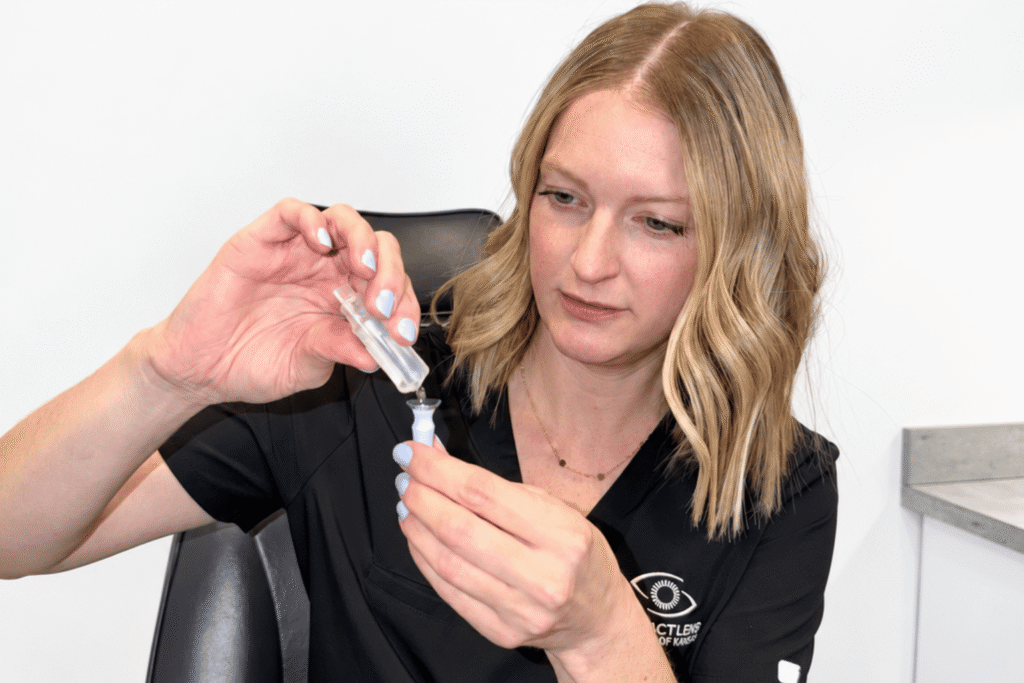
Before a scleral lens goes on the eye, the bowl of the lens is filled completely with preservative-free saline. This is different from the solution used to clean or disinfect the lens. The saline fills the space between the scleral lens and the cornea while you wear it.
Because that fluid sits against the eye for hours, it is important to use the correct preservative-free product. Do not fill a scleral lens with tap water, regular eye drops, or multipurpose contact lens solution unless your doctor has specifically told you to use a certain product. Dr. Letourneau and our team review which filling solution is appropriate for each patient.
Cleaning Solution and Filling Solution Are Not the Same Thing
This is one of the easiest things to mix up when you first start wearing scleral lenses. The product you use to clean or disinfect your lenses is usually not the same product you use to fill them before insertion.
A simple way to think about it is:
Cleaning and disinfecting products are for lens care. Preservative-free saline is for filling the lens before it goes on your eye.
If you are ever unsure which bottle is for which step, ask! Molly and Cassie work with patients on this during training because there are usually several bottles involved in the beginning, and it is completely normal to need a reminder.
How Do You Store Scleral Lenses Overnight?
After cleaning, scleral lenses should be placed in the appropriate storage or disinfection case with the recommended solution. The lens case matters too. It should be kept clean and replaced as recommended.
Do not continually top off old solution with fresh solution. Start with fresh solution according to the directions for your care system. If you use a hydrogen peroxide system, make sure you are using the correct case that is designed to neutralize the solution.
What Should You Do in the Morning?
When you are ready to put your lenses in, follow the instructions for your specific care system. Depending on the system, you may need to rinse the lens with an approved solution before insertion.
Then fill the lens completely with preservative-free saline. Try to fill it all the way to the top. This helps reduce the chance of trapping an air bubble underneath the lens. An air bubble can make
the lens feel uncomfortable and may interfere with vision. If you put the lens in and notice a bubble, remove it, refill it, and try again.
Do Scleral Lenses Need to Be Cleaned Every Day?
If you wear your lenses daily, they should generally be cleaned and disinfected every time they are removed for the day. Skipping cleaning may allow deposits to build up on the lens. Over time, that buildup can affect comfort, vision, and how well the surface of the lens stays wet.
Some people naturally produce more deposits than others. If your lenses start looking cloudy, feeling greasy, or becoming less comfortable than they used to, let Dr. Letourneau know. It may be a cleaning issue, but there could also be something else going on with the fit or the surface of the lens.
Why Do My Scleral Lenses Look Cloudy?
Cloudy scleral lenses can happen for a few different reasons.
- There may be debris underneath the lens.
- There may be deposits on the front surface.
- The surface of the lens may be drying out.
- There could also be an issue with your tear film.
The solution is not always “clean them more.” That is why it helps to pay attention to when the cloudiness happens. Does it happen right after insertion? After a few hours? Only in one eye? Does taking the lens out and refilling it help? Those details can help Dr. Letourneau figure out whether the problem is related to care, fit, the ocular surface, or something else.
Can You Use Eye Drops With Scleral Lenses?
Sometimes, but not every eye drop is appropriate for contact lens wear. If you are using eye drops for dry eye, allergies, redness, or another eye condition, ask Dr. Letourneau which products are safe to use with your scleral lenses.
Some drops contain preservatives or ingredients that may not be ideal to use while a lens is on the eye. Do not assume that because a drop says “lubricating” or “for dry eyes” that it is automatically okay to use with scleral lenses.
What Products Should You Avoid?
Avoid using anything on your scleral lenses unless you know it is appropriate for your lenses and your eyes.
That includes:
- Tap water
- Saliva
- Household soap
- Random cleaning products
- Soft contact lens solutions unless recommended
- Eye drops that have not been approved for use with your lenses
- Reusing old saline from earlier in the day
If you are not sure, ask before using it! It is much easier to check with the office than to deal with an irritated eye afterward.
How Often Should You Replace Your Lens Case?
Lens cases need attention too. A dirty case can undo a lot of the good work you are doing by carefully cleaning your lenses. Follow the replacement schedule recommended with your care system.
Keep the case clean, let it dry appropriately between uses when directed, and do not keep using an old case indefinitely. If you use a hydrogen peroxide system, use the specific case made for that system and replace it according to the manufacturer’s instructions.
What If Cleaning My Scleral Lenses Feels Overwhelming?
That is normal in the beginning. New scleral lens wearers are learning several things at once: how to insert the lens, how to remove it, how to clean it, how to fill it, what solution goes where, and what to do if something does not feel right.
It can sound like a lot when you hear everything at one time. That is why we do not expect patients to just figure it out on their own.
Our Specialty Contact Lens Coordinators, Molly and Cassie, work with patients during the training process so they can practice insertion, removal, filling, cleaning, and lens care before heading home.
Sometimes it takes a few tries. That is normal! The goal is for the routine to feel comfortable and manageable, not rushed.
What If I Am Still Having Trouble at Home?
Call us! If you cannot get the lens in, keep getting air bubbles, are unsure which solution to use, or are struggling with removal, those are all things we would rather help you with than have you guess.
It is also helpful to tell us exactly what is happening.
For example:
“My lens feels good when I put it in, but gets cloudy after three hours.”
“I keep getting a bubble under the left lens.”
“My lens is clean, but the surface still looks hazy.”
Those details give Dr. Letourneau, Molly, and Cassie more information to work with.
When Should You Call Us?
Cleaning issues can sometimes cause temporary irritation, but certain symptoms should not be ignored. If you have significant eye pain, unusual redness, sudden blurry vision, discharge, sensitivity to light, or a lens that suddenly becomes very uncomfortable, remove the lens and contact your eye care provider. Do not keep wearing a lens that is causing significant pain or irritation just because you think you need to “get used to it.”
A Good Cleaning Routine Gets Easier With Practice
Cleaning scleral lenses may seem complicated at first, but most patients settle into a routine once they know what each product is for and what order to use them in. The basics are simple: clean hands, clean lenses, proper disinfection, fresh preservative-free saline, and no tap water.
From there, the exact routine should be based on the care system recommended for your lenses. Dr. Letourneau works with patients to make sure their scleral lenses are not only giving them good vision, but are also fitting and functioning well over time. Molly and Cassie help patients feel confident with the everyday side of scleral lens wear, from insertion and removal to cleaning and care.
We help patients around Kansas City, Lawrence, Topeka, and surrounding Kansas and Missouri communities who need specialty contact lens care.
If you are new to scleral lenses or still have questions about cleaning and caring for them, you do not have to figure it out on your own. We are happy to help!!